Business & Tech Essentials
Cybersecurity Compliance Roadmap CCC: Aramco SACS 002 Testing and Validation in Depth
By the time an organization reaches Phase 4, the main controls are usually in place.
Security gaps have been addressed. Documentation is prepared. The environment looks ready.
But this is the stage where many teams slow down, because testing shows what is really happening behind the scenes.
Phase 4 is about checking whether the controls from earlier phases are actually working in the live environment. It is also the stage where technical evidence starts to matter a lot, because paper compliance is never enough on its own.
Right after understanding this, most companies realize one thing — compliance is not quick and doing it without expert direction leads to delays. That is where Aramco CCC Consultancy becomes critical to move fast and avoid costly mistakes.
Why This Phase Matters
Testing and validation help organizations confirm that the controls are not just documented, but active and effective.
This phase usually helps teams:
- Find weak points before the audit
- Check whether controls are really enforced
- Collect proof for internal review
- Reduce the risk of last minute surprises
- Prepare better for the final compliance stage
Many organizations feel confident at this point, but testing often shows small issues that were missed earlier. That is why this phase is important.
Step by Step Process
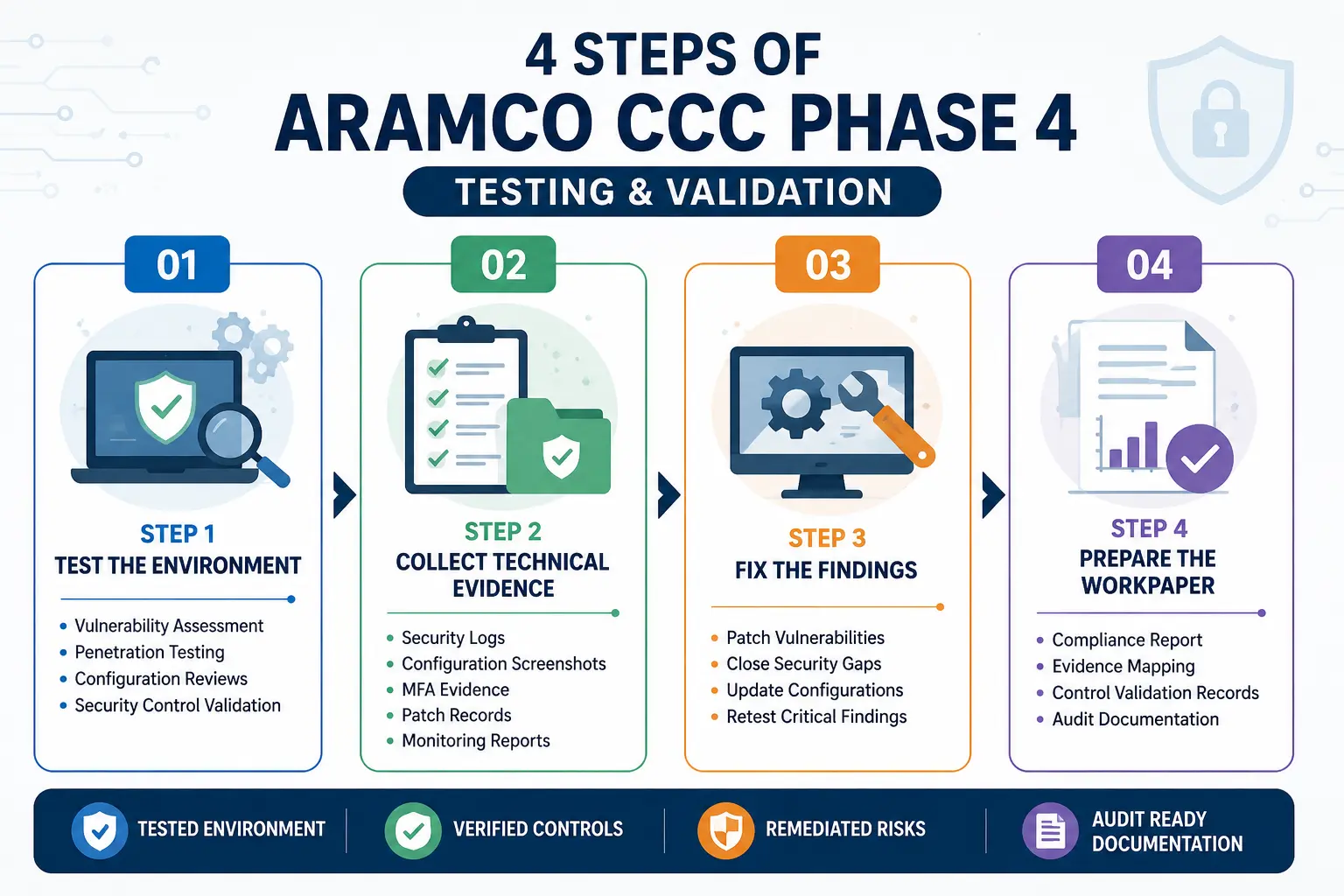
Step 1 Test the Environment
The first step is to check the environment carefully.
This normally includes:
- Vulnerability scanning
- Penetration testing
- Review of internet facing systems
- Review of cloud services
- Review of internal systems where needed
Step 2 Collect Technical Evidence
Once testing is done, the next step is to save evidence.
Useful evidence usually includes:
- Screenshots
- Scan results
- Logs
- Configuration outputs
- Test reports
The goal is simple. Anyone reviewing the file should be able to understand what was tested and what the result was.
Step 3 Fix the Findings
Testing is not the final goal.
If issues appear, they need to be addressed.
Typical actions include:
- Patching weak systems
- Closing open vulnerabilities
- Updating configurations
- Retesting after remediation
This is the part where organizations often lose time if the team is not prepared.
Step 4 Prepare the Workpaper
After testing and fixing, the results should be organized into a clean workpaper or self compliance report.
This report usually includes:
- What was tested
- What was found
- What was fixed
- What evidence was collected
- What still needs attention
What Organizations Mainly Face
During this phase, most organizations run into the same problems.
- Scope is not clearly defined
- Evidence is saved in a messy way
- Findings are not closed on time
- Reports are prepared too late
- Teams do not know who owns each issue
These problems may look small, but they create delays when the final review starts.
Simple Evidence Checklist
|
Item |
Why It Matters |
|
Test report |
Shows what was checked |
|
Screenshots |
Gives visual proof |
|
Logs |
Supports technical validation |
|
Remediation notes |
Shows issues were fixed |
|
Workpaper |
Brings everything together |
Final Thoughts
Phase 4 is where compliance becomes real.
This is the stage that shows whether the earlier work is actually holding up in practice. If testing is done properly, the next phase becomes much smoother. If it is rushed, the final audit usually becomes harder.
Want to understand the complete compliance process? Explore the full Cybersecurity Compliance Roadmap CCC to learn all phases from gap analysis to Aramco certification approval.
Disclaimer: All logos, trademarks, and brand names used in this document are the property of their respective owners. Their use here is for identification purposes only and does not imply endorsement.
Recent News

AI Agents vs AI Copilots vs AI Chatbots: What Is the Real Difference?
10-09-2026
How to Set Default General Product Posting Groups in Dynamics 365 Business Central
08-09-2026
How to Apply Sensitivity Labels in Power BI for Data Protection
08-09-2026

LEAP 2026 Day 4 Highlights: $15B in Total Investments & The Human Capital Era
04-09-2026

LEAP 2026 Day 3 Highlights: $857M in Tech Deals, VC Growth & Local Manufacturing
03-09-2026

LEAP 2026 Day 2 Highlights: More Than $2.5 Billion Invested to Boost Saudi Arabia's Data Hubs and Digital Capabilities
02-09-2026

LEAP 2026 Day 1 Highlights: $15B+ Investments & 5 Enterprise Tech Trends
01-09-2026
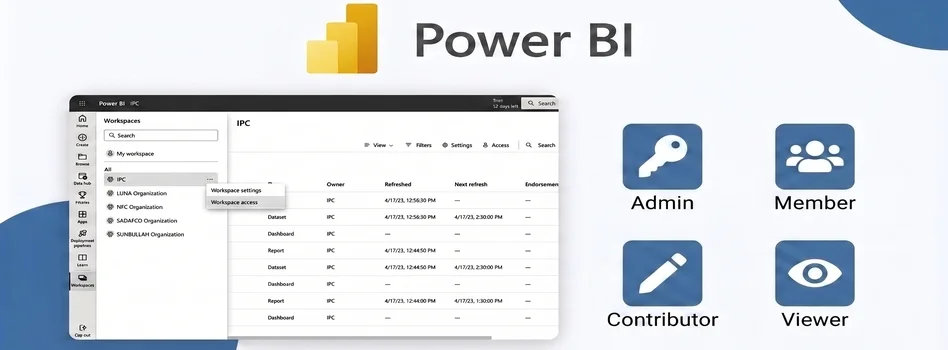
How to Assign Workspace Roles and Permissions in Power BI Service
25-08-2026
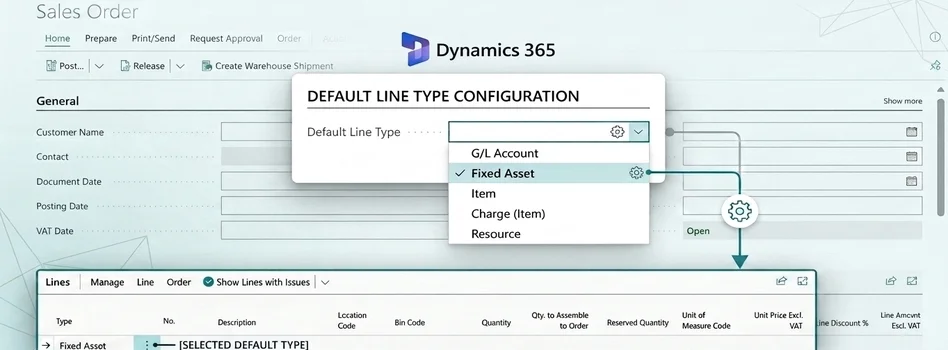
How to Set Default Document Line Types in Dynamics 365 Business Central
25-08-2026

How to Create a List Page in Business Central Using AZ AL Dev Tools
19-08-2026

Your choice regarding cookies on this site
Policy, By Continuing, You are agreeing to Our Terms of Use and Consenting to the above.
Privacy Policy Powered By |