Business & Tech Essentials
Cybersecurity Compliance Roadmap (CCC) – Aramco SACS-002 in Brief
If you are working with Saudi Aramco or planning to become a vendor, cybersecurity is not optional anymore. You must align with the SACS-002 standard and obtain the Cybersecurity Compliance Certificate (CCC).
This roadmap is not just a technical checklist. It is a structured journey that ensures your systems, data, and operations meet strict security expectations set by Aramco.
Right after understanding this, most companies realize one thing — compliance is not quick and doing it without expert direction leads to delays. That is where Cybersecurity Compliance Certification (CCC) Consultancy becomes critical to move fast and avoid costly mistakes.
What is CCC and Why It Matters
The Cybersecurity Compliance Certificate (CCC) is proof that your organization meets Aramco’s cybersecurity requirements under SACS-002.
- Mandatory for vendors and third parties
- Required before system integration or data exchange
- Valid for a limited time and needs renewal
- Ensures protection of critical infrastructure
In simple words, no CCC means no business with Aramco
CCC vs CCC+
|
Type |
Assessment Style |
Use Case |
|---|---|---|
|
CCC |
Remote audit |
Low-risk vendors |
|
CCC+ |
On-site audit |
High-risk or integrated systems |
If your systems connect directly or handle sensitive data, expect CCC+
Cybersecurity Compliance Roadmap (Step by Step)
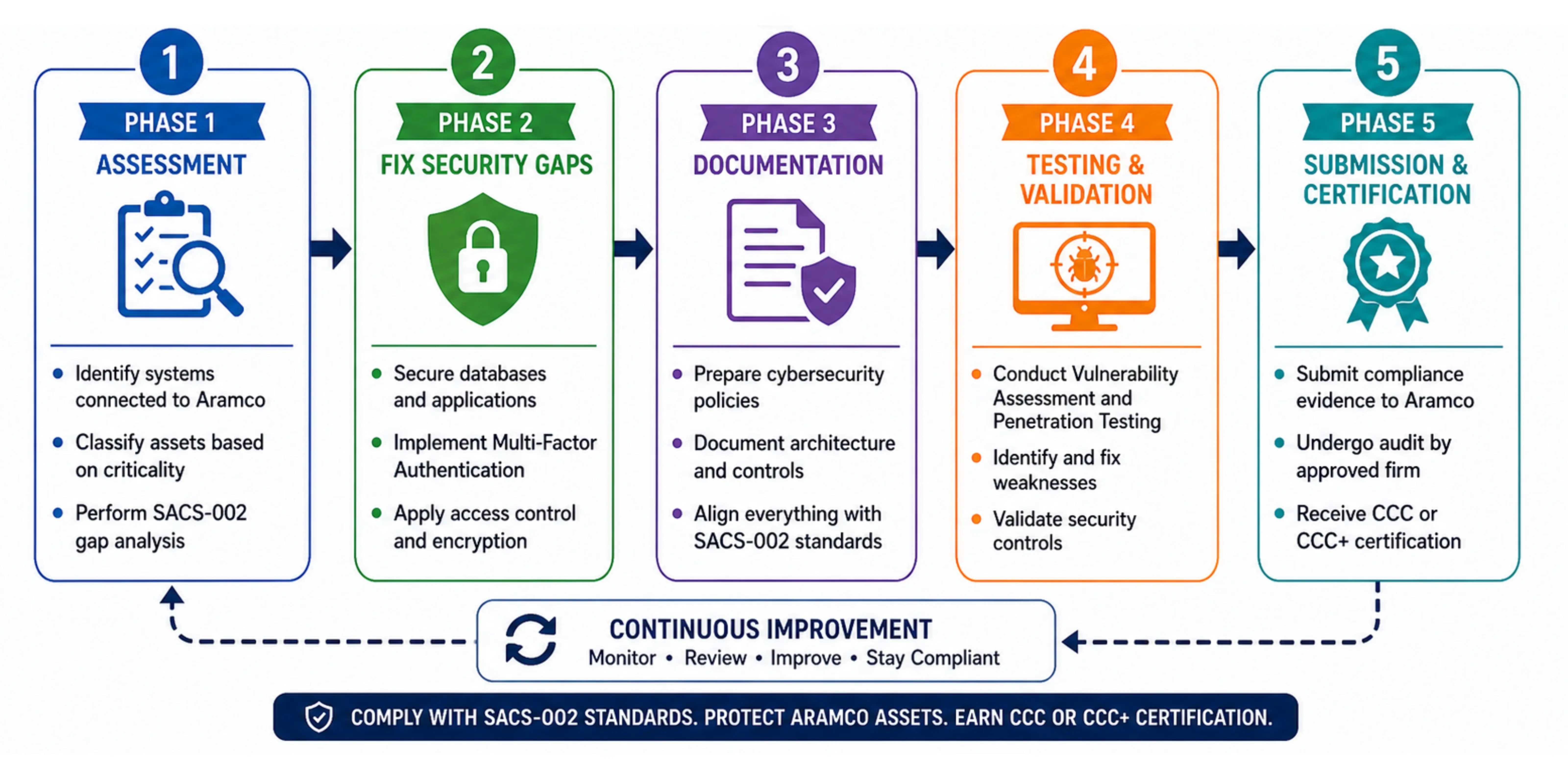
Phase 1 – Assessment
This is where everything starts.
- Identify systems connected to Aramco
- Classify assets based on criticality
- Perform SACS-002 gap analysis
Most companies fail here because they underestimate system scope
Phase 2 – Fix Security Gaps
Now comes the real work.
- Close unnecessary open ports
- Secure databases and applications
- Implement Multi-Factor Authentication
- Apply access control and encryption
This phase defines whether you pass or fail later
Phase 3 – Documentation
Technical work alone is not enough.
- Prepare cybersecurity policies
- Document architecture and controls
- Align everything with SACS-002 standards
If it is not documented, it does not exist for auditors
Phase 4 – Testing & Validation
Before submission, you must test your environment.
- Conduct Vulnerability Assessment and Penetration Testing
- Identify and fix weaknesses
- Validate security controls
Skipping this step leads to audit rejection
Phase 5 – Submission & Certification
Final step.
- Submit compliance evidence to Aramco
- Undergo audit by approved firm
- Receive CCC or CCC+ certification
After approval, you are officially compliant
Key SACS-002 Requirements You Cannot Ignore
To pass CCC, these areas must be strong:
- Asset management and system visibility
- Strict access control and identity management
- Data protection with encryption
- Continuous monitoring and threat detection
- Incident response planning
These are not optional controls, they are mandatory
Common Mistakes Companies Make
- Incomplete system identification
- Weak documentation
- Ignoring internal access control
- No proper gap analysis
- Rushing audit without testing
Most CCC delays happen due to these basic issues
Final Thoughts
The CCC roadmap is straightforward on paper but execution is where companies struggle. Aramco expects not just compliance, but maturity in how cybersecurity is handled.
If you approach it step by step — assessment, fixing gaps, documentation, testing, and submission — the process becomes manageable and predictable.
For organizations in Saudi Arabia, CCC is more than a requirement. It is a gateway to working with one of the world’s largest enterprises and proving your security credibility at a global level.
Disclaimer: All logos, trademarks, and brand names used in this document are the property of their respective owners. Their use here is for identification purposes only and does not imply endorsement.
Recent News
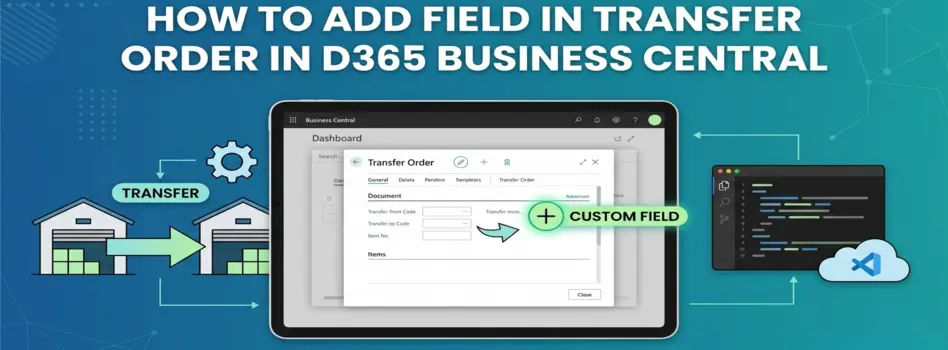
How to Add Field in Transfer Order in D365 Business Central
08-05-2026
Saudi Arabia's NCA Cybersecurity Guidelines
27-04-2026
How to Set G/L Account as Default Line Type in Dynamics 365 Business Central
26-04-2026
How to Set Default Dimensions for GL Accounts in D365 Business Central
21-04-2026

Microsoft Copilot in Depth: Features, Use Cases, and Business Impact (2026)
19-04-2026
Steps to Manage Data Source Permissions for APIs in Power BI Desktop and Service
19-04-2026

Sending Alerts Using Power Automate in SharePoint (Step-by-Step Guide)
13-04-2026
%20in%20Brief.webp)
AI (Artificial Intelligence) in Brief
08-04-2026
How to Post a Batch in Purchase Orders in D365 Business Central
06-04-2026
How to Manage User Permissions in a SharePoint Document Library
29-03-2026

Your choice regarding cookies on this site
Policy, By Continuing, You are agreeing to Our Terms of Use and Consenting to the above.
Privacy Policy Powered By |