Business & Tech Essentials
Cybersecurity Compliance Roadmap CCC: Aramco SACS 002 Submission & Certification in Depth
After completing assessment, remediation, documentation, testing, and validation, organizations finally reach the most anticipated phase of the Cybersecurity Compliance Roadmap CCC journey.
Phase 5 is where all previous work comes together.
This stage focuses on demonstrating compliance, completing the assessment process, obtaining certification, and submitting the required documents for approval.
Right after understanding this, most companies realize one thing — compliance is not quick and doing it without expert direction leads to delays. That is where Aramco CCC Consultancy becomes critical to move fast and avoid costly mistakes.
Why Phase 5 Matters
By the time organizations reach this stage, security controls have already been implemented and validated.
Now the focus shifts to proving compliance through formal assessment and certification activities.
Phase 5 helps organizations:
- Demonstrate compliance with SACS 002 requirements
- Validate implemented cybersecurity controls
- Complete certification requirements
- Obtain the Cybersecurity Compliance Certificate
- Meet Aramco vendor onboarding requirements
- Maintain eligibility for future projects
Without successful completion of this phase, all previous efforts remain incomplete.
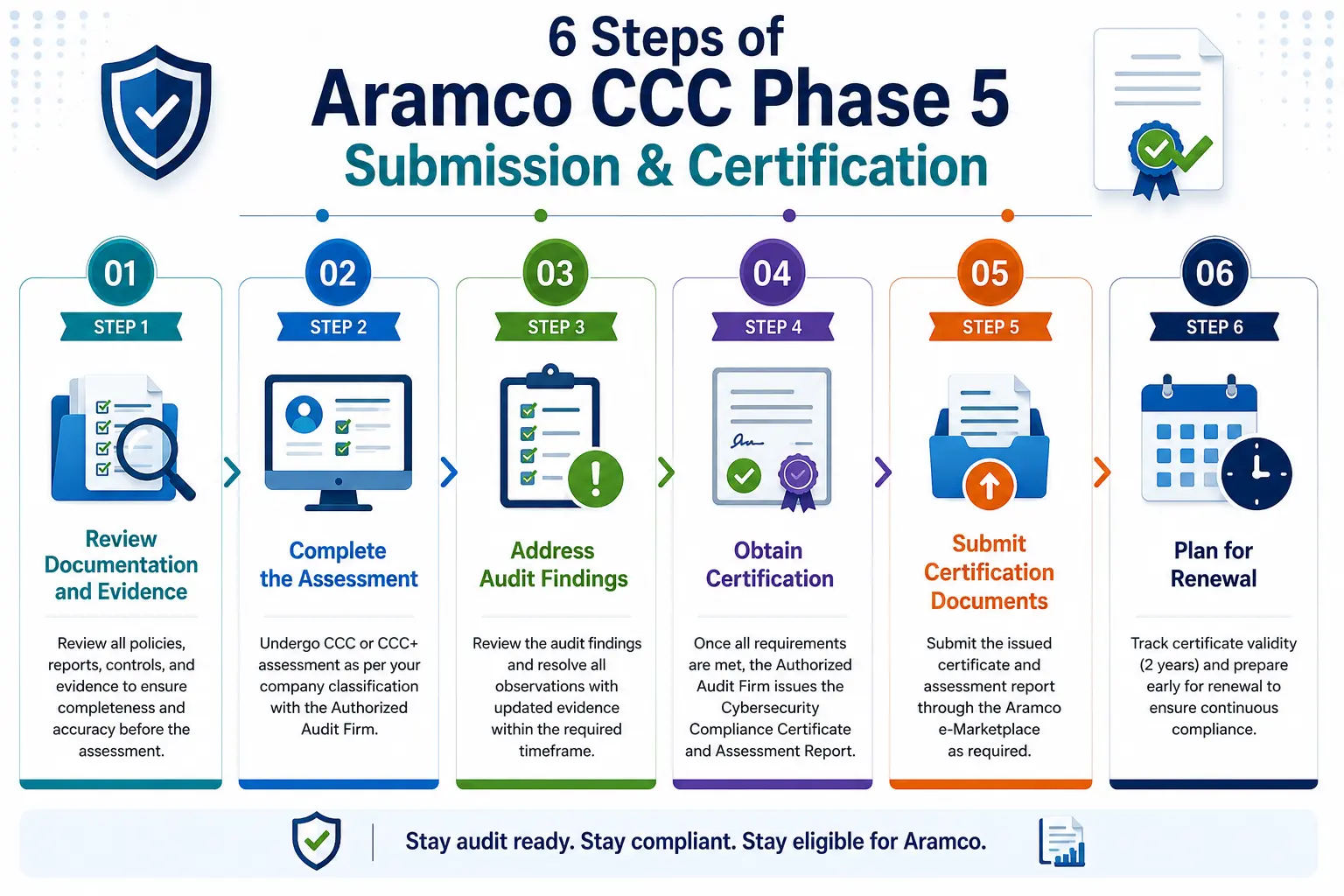
Phase 5 Submission and Certification Flow
|
Stage |
Objective |
|
Audit Preparation |
Review evidence and reports |
|
Assessment |
CCC or CCC+ audit |
|
Findings Closure |
Resolve remaining observations |
|
Certificate Issuance |
Obtain CCC certificate |
|
Submission |
Upload required documents |
|
Renewal Planning |
Prepare future compliance cycle |
Step 1 Review Documentation and Evidence
Before the assessment begins, organizations should perform a final review of all compliance materials.
This typically includes:
- Cybersecurity policies
- Technical procedures
- Architecture diagrams
- Vulnerability assessment reports
- Penetration testing results
- Evidence repositories
- Compliance reports
I often see organizations discover missing evidence at this stage.
A final review helps identify gaps before auditors do.
Step 2 Complete the Assessment
The assessment approach depends on the organization's classification. According to Aramco's CCC program, some vendors undergo a remotely verified compliance assessment (CCC), while higher-risk classifications require an on-site assessment (CCC+).
During the assessment, auditors typically review:
- Governance controls
- Access management controls
- Security monitoring practices
- Technical configurations
- Supporting evidence
- Documentation accuracy
Auditors are not only checking whether controls exist.
They are validating whether controls are operating effectively and consistently.
Step 3 Address Audit Findings
Very few organizations complete an assessment without any observations.
This stage focuses on resolving issues identified during the review process.
Common findings include:
- Missing evidence
- Outdated documentation
- Incomplete policy approvals
- Configuration inconsistencies
- Unclear ownership of controls
- Unsupported security procedures
Organizations should address findings quickly and provide updated evidence where required.
The faster findings are closed, the smoother the certification process becomes.
Step 4 Obtain Certification
Once all applicable requirements have been successfully verified, certification can be issued through the authorized assessment process.
Typical deliverables include:
- Cybersecurity Compliance Certificate (CCC)
- Compliance assessment report
- Supporting audit documentation
- Assessment summary records
At this point, organizations have formal evidence that their cybersecurity program aligns with the applicable SACS 002 requirements.
Step 5 Submit Certification Documents
After certification, organizations must complete the submission process.
This usually includes:
- Compliance certificate
- Compliance report
- Supporting assessment records
- Requested vendor documentation
Aramco requires the issued certificate and compliance report to be submitted through its designated process after assessment completion.
Submission accuracy is important.
Even small administrative mistakes can delay approval activities.
Step 6 Plan for Renewal
Many companies treat certification as the finish line.
Experienced compliance teams know it is actually the beginning of an ongoing compliance cycle.
Organizations should:
- Monitor security controls continuously
- Update documentation regularly
- Track infrastructure changes
- Maintain evidence repositories
- Review policies annually
- Prepare for future reassessments
CCC certificates are generally valid for two years, after which renewal activities are required.
Common Challenges Organizations Face
Challenge 1 Missing Audit Evidence
Organizations often discover that:
- Screenshots are outdated
- Reports are incomplete
- Supporting records are missing
Good evidence management prevents this issue.
Challenge 2 Documentation Mismatch
Sometimes policies state one thing while operational practices show another.
This creates unnecessary questions during assessment.
Challenge 3 Delayed Findings Closure
Audit observations left unresolved can extend certification timelines significantly.
Challenge 4 Last Minute Preparation
Many organizations wait until assessment week to organize documentation.
This usually creates stress and avoidable delays.
Certification Readiness Checklist
Before moving into final submission, verify:
- Policies approved
- Testing completed
- Findings resolved
- Evidence updated
- Compliance report reviewed
- Documentation organized
- Assessment completed
- Submission package prepared
Completing this checklist reduces surprises during certification activities.
Key Takeaways
Phase 5 is where cybersecurity compliance becomes official.
Organizations move beyond implementation and validation into formal certification and submission activities.
Success during this stage depends on:
- Strong documentation
- Accurate evidence
- Successful testing results
- Effective findings management
- Proper submission procedures
Companies that maintain organized records throughout the roadmap usually complete certification faster and with fewer obstacles.
Final Thoughts
Submission and certification represent the culmination of the entire Cybersecurity Compliance Roadmap CCC journey.
From assessment and remediation to documentation and testing, every phase contributes to this final outcome.
I think organizations that approach certification as a structured process rather than a last-minute activity typically experience smoother assessments and stronger long-term compliance maturity.
Want to understand the complete compliance process? Explore the full Cybersecurity Compliance Roadmap CCC to learn all phases from gap analysis to Aramco certification approval.
Disclaimer: All logos, trademarks, and brand names used in this document are the property of their respective owners. Their use here is for identification purposes only and does not imply endorsement.
Recent News

How to Do Predictive Analysis in Power BI Desktop
07-08-2026

How to Navigate Department Documents in SharePoint
07-08-2026
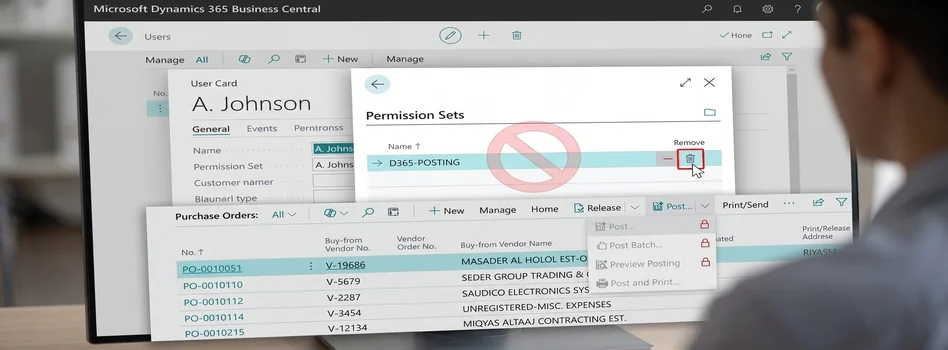
How to Remove or Hide Posting Rights for Users in Dynamics 365 Business Central
07-08-2026

Power BI Mobile Application Features and Usage Guide
27-07-2026
ZATCA E-Invoicing Phase 2 Integration Explained
27-07-2026
Saudi Arabia's NCA Cybersecurity Guidelines
27-07-2026

Row-Level Security (RLS) in Power BI
27-07-2026

How to Use Power BI Copilot
20-07-2026
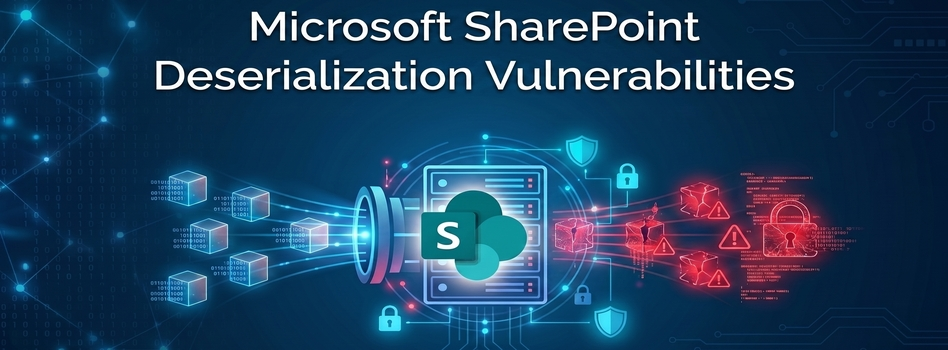
Microsoft SharePoint Deserialization Vulnerabilities: What Organizations Need to Know
15-07-2026

How to Add Fields in Business Central Using Customized Pages
13-07-2026

Your choice regarding cookies on this site
Policy, By Continuing, You are agreeing to Our Terms of Use and Consenting to the above.
Privacy Policy Powered By |